Understanding Lighting Techniques That Can Transform Your Photos
Bad light is the reason sharp photos still look “off.” Faces go flat, shadows turn muddy, and indoor shots get weird color casts. If you’re trying to improve fast with limited gear, lighting is the lever that changes everything. This article is for beginners and improvers who want clearer results.
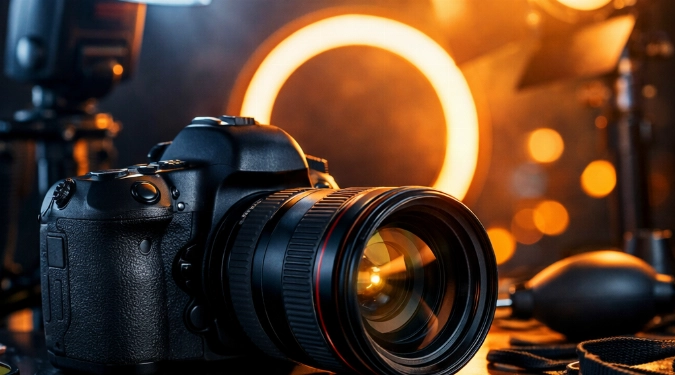
Learn to read light fast, even in messy rooms. You’ll set exposure with intent using shutter, aperture, and ISO. You’ll shape faces with window light, a flash, or a cheap reflector. This guide gives repeatable setups, plus quick fixes for harsh sun and mixed indoor bulbs.
Start By Reading Light, Not Gear
Before you change settings, look for three things. First, check direction. Side light shows texture, and front light hides it. Second, check size. Big sources look soft, and small sources look hard. Third, check color. Daylight, tungsten, and LEDs can clash.
Use your hand as a test target. Turn it toward the light until knuckles show detail. Then rotate until shadows deepen. That tells you where to place a face or product.
Control Exposure Without Guessing
Pick one priority and lock it. For portraits, start at f/2 to f/4 for blur. For groups, start at f/5.6 to f/8 for depth. For action, start at 1/500 or faster.
Then set ISO to hit your shutter and aperture. Keep ISO as low as you can, but do not fear modern sensors. Many cameras look clean at ISO 1600 to ISO 3200.
Use exposure compensation when light fools the meter. Snow, sand, and white walls often need +0.7 to +1.7. Dark stages and black clothes often need -0.3 to -1.3.
Window Light Setups That Always Work
One-Window Portrait
Place your subject one to two feet from the window. Turn them 45 degrees away from it. Add a white foam board on the shadow side. Aim for a soft shadow edge under the cheek.
Backlit Window With Clean Skin
Put the window behind the subject for a bright background. Expose for the face, not the window. Add fill using a reflector, or a small flash at low power.
For a low-cost kit, use a $10 foam board and a $25 5-in-1 reflector. Brands that hold up include Neewer, Godox, Westcott, Impact, Manfrotto, and Profoto.
Midday Sun Fixes That Look Professional
Harsh sun is a tiny light source. You must either move it, soften it, or match it.
Move it by finding open shade. Stand near the edge of shade and face the bright sky. That gives soft light with catchlights. Watch for green color spill from trees.
Soften it with diffusion. A 5-in-1 scrim or a translucent shower curtain can work. Hold it close to the subject for the softest result.
Match it with flash. Use high-speed sync if you want f/1.8 in bright sun. A Godox AD200Pro or Profoto B10 is common for this look.
Flash Basics That Do Not Scream “Flash”
Direct on-camera flash looks flat because it is near the lens. Bounce fixes that by enlarging the source. Aim at a neutral ceiling or wall, not wood or green paint.
Set your camera exposure for the ambient first. Then add flash to lift the subject. A simple starting point is 1/200, f/2.8, ISO 400, then adjust flash power.
Learn one modifier well. A small softbox gives consistent results. A MagMod MagBounce is fast for events. A shoot-through umbrella is cheap and forgiving.
Mixed Light And White Balance You Can Trust
Mixed light is the fastest way to get odd skin tones. Decide what color should win. Then remove or overpower the other sources.
If room lamps are orange, either turn them off or gel your flash. A 1/2 CTO gel often matches warm LEDs. Then set white balance to Tungsten, around 3200K.
If you cannot control lights, shoot RAW. Use a gray card once per scene. The X-Rite ColorChecker Passport and Datacolor SpyderCHECKR are reliable options.
A Practice Plan That Builds Real Skill
Run three 20-minute drills each week. Drill one is window portraits with reflector only. Drill two is open shade with exposure compensation. Drill three is bounce flash in a hallway.
Keep notes in your phone. Record settings, distance to the light, and what failed. That habit turns a Photography skills course into usable muscle memory.
If you want structure, look for a Beginner photography course that assigns weekly shoots. A solid Photography learning program also includes critiques. For deeper work, choose Professional photography training that covers flash ratios and gels.
FAQ
What Should I Buy First For Better Light?
Start with a reflector and a stand clamp. Then add a speedlight and a small softbox. Spend on stability before power.
How Do I Avoid Flicker Under LEDs?
Use a slower shutter like 1/60 or 1/100 when possible. Test bursts at different shutters. Some venues need 1/50 because of power frequency.
What Class Format Helps Lighting Click Faster?
Choose Online photography classes with assignments and feedback. Look for modules that include RAW files to edit. A good Digital photography training track also explains metering modes.
Where Do Camera Settings Fit Into Lighting Skill?
Settings are the translation layer. Light placement creates shape and mood first. Camera photography lessons help you repeat that look under pressure.
References
- Profoto: Lighting education and product documentation
- Godox: Flash system manuals and specs
- Westcott: Modifier guides and lighting tutorials
- X-Rite: Color management and ColorChecker documentation
Disclaimer: The information provided in this article is for educational and informational purposes only. It does not constitute professional advice. Readers should conduct their own research and consult with qualified professionals before making any decisions.