
Car Painting 101: Repair, Repaint, and Restore the Shine
Your vehicle’s paint is its first line of defense against the elements and its most visible feature. Over time, this finish naturally degrades from sun exposure, road debris, and minor accidents. This guide provides a fundamental overview of car painting, covering how to address initial damage through repair, the process of a complete repaint, and the final steps to restore that showroom shine. Whether you are looking for a “car painting and body shop near me” for a full restoration or just a quick fix, understanding these three stages is essential.
Repair: Addressing Imperfections First
Before any new paint can be applied, the underlying surface must be pristine. The repair phase is crucial because painting over damage will only highlight it. This stage involves fixing scratches, dents, and rust that have compromised the vehicle’s existing paint layer.
For minor issues, many modern shops offer “same day auto scratch and wheel repair.” This typically involves spot treatments where technicians clean the affected area, apply color-matched paint, and clear coat it, often in just a few hours. For more significant damage, such as dents from a collision, the process is more involved. Technicians must first reshape the metal panel, apply body filler to smooth the surface, and then sand it down until it is perfectly level with the surrounding area. Only then is the surface ready for primer.
Repaint: The Transformation Process
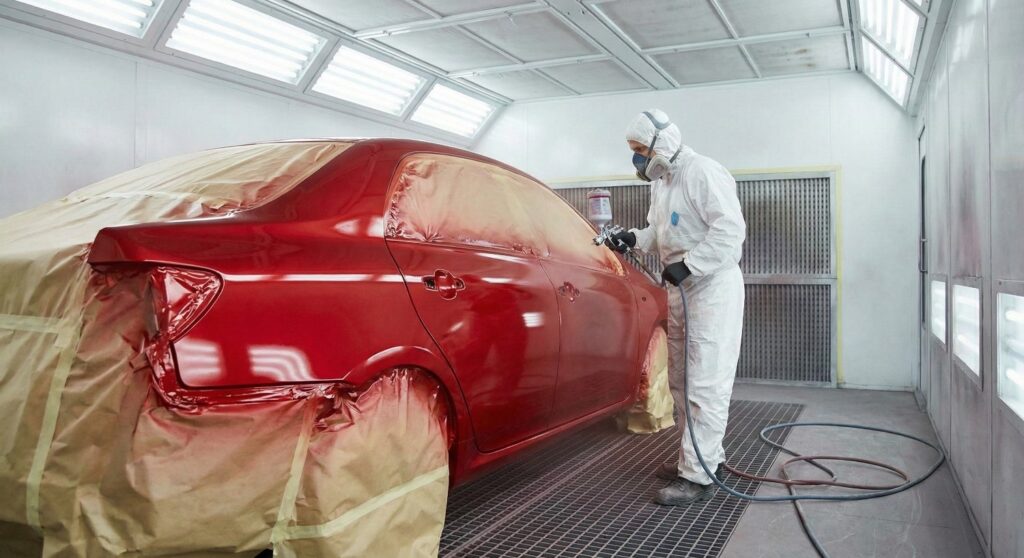
Once repairs are complete, the repainting process begins. This is a multi-step procedure that requires precision and a controlled environment, typically a spray booth, to prevent dust and debris from ruining the finish.
- Surface Preparation: The entire vehicle (or panel) is sanded to create a rough surface that the new paint can adhere to. Areas that will not be painted, such as windows, trim, and tires, are carefully taped off and covered.
- Priming: A primer coat is applied first. This serves as a bonding agent between the bare metal or body filler and the base coat of paint. It also helps to smooth out any remaining microscopic imperfections and provides a uniform color base. After applying, the primer is sanded again to ensure a perfectly smooth finish.
- Base Coat Application: This is the stage where the actual color is applied. Using a spray gun, technicians apply several layers of the base coat until the desired color depth and coverage are achieved. The paint code on your vehicle’s information placard ensures an exact color match.
- Clear Coat Application: The final step in the painting booth is the clear coat. This is a transparent layer that protects the base coat from UV rays, chips, and chemicals. It is also what gives the car its glossy finish. Multiple layers of clear coat are applied for durability and depth.
Restore the Shine: The Final Touches
After the clear coat has cured—which can take several hours to a few days depending on the type of paint and curing method—the vehicle is not yet ready. The final phase is restoration, which brings out the paint’s maximum luster and eliminates any minor imperfections from the painting process itself.
This involves a process known as “cut and buff.” Technicians use a polishing compound with a rotary buffer to remove any microscopic surface texture, known as “orange peel,” or tiny dust nibs that may have landed in the clear coat. This is followed by a finer polish to remove swirl marks from the compounding step, leaving a mirror-like finish. Finally, a high-quality wax or ceramic coating is applied to seal the surface and protect the new paint job, ensuring the shine lasts.
Frequently Asked Questions
How can I get an estimate for car painting? Getting a price quote has become easier with digital tools. Many body shops now offer a “collision repair estimate online” or a “car scratch repair online quote” directly through their websites. You typically upload photos of the damage, and they provide a preliminary estimate. You can also use third-party “car painting cost estimator” tools to get a general idea of pricing based on your vehicle type and the scope of work.
What factors influence the cost of painting a car? When searching for “car paint shops near me prices,” you’ll find that costs vary significantly. Key factors include the size of the vehicle, the quality of paint used (e.g., single-stage vs. base coat/clear coat), the amount of preparation and repair work needed, and the shop’s labor rate. A high-quality, full-car repaint will always cost more than a basic respray due to the extensive labor involved in preparation and finishing.
Conclusion
A successful car painting project is a systematic process that begins with meticulous repair work to ensure a flawless foundation. The repaint phase involves careful preparation, priming, and the layered application of base and clear coats in a controlled environment. Finally, the shine is restored through professional polishing and protective coating. By understanding these three critical stages—repair, repaint, and restore—you can make informed decisions about your vehicle’s care and achieve a lasting, high-quality finish.