

5 Possible Signs Associated With Stomach Cancer
Stomach cancer can develop slowly, often lurking quietly before manifesting clear physical changes. Because the stomach is a flexible organ designed to expand and process food, early signs may resemble common digestive issues like a mild upset tummy or heartburn. Learning about these potential stomach cancer symptoms is crucial for early detection. This guide outlines five specific warning signals to help you understand when vague discomfort warrants a conversation with a qualified healthcare professional.
1. Persistent Indigestion and Heartburn
Indigestion and heartburn are extremely common experiences, often triggered by a spicy meal or eating too late at night. However, when these symptoms of stomach cancer appear, they behave differently. Instead of resolving with antacids or time, the burning sensation in the chest or upper abdomen becomes chronic.
If you find yourself experiencing indigestion that lasts for more than three weeks, or if you develop heartburn that does not respond to typical over-the-counter treatments, it is a significant red flag. While this is most often caused by issues like acid reflux (GERD), persistent digestive distress that is new to you should always be evaluated to rule out more serious underlying conditions.
2. Unexplained Weight Loss and Loss of Appetite
Losing weight without trying is one of the most distinct medical warning signs. If you have not changed your diet or exercise routine but see the scale dropping significantly (e.g., 5% of your body weight over six months), it is a vital symptom of stomach cancer to investigate.
This often pairs with a noticeable loss of appetite. You might sit down to a meal feeling hungry but lose interest in food after just a few bites. This happens because cancer cells can alter the body’s metabolism, causing muscle and fat loss. Furthermore, a tumor in the stomach can physically interfere with digestion or release substances that suppress hunger signals, leading to nutritional deficits.
3. Feeling Full After Eating a Small Amount
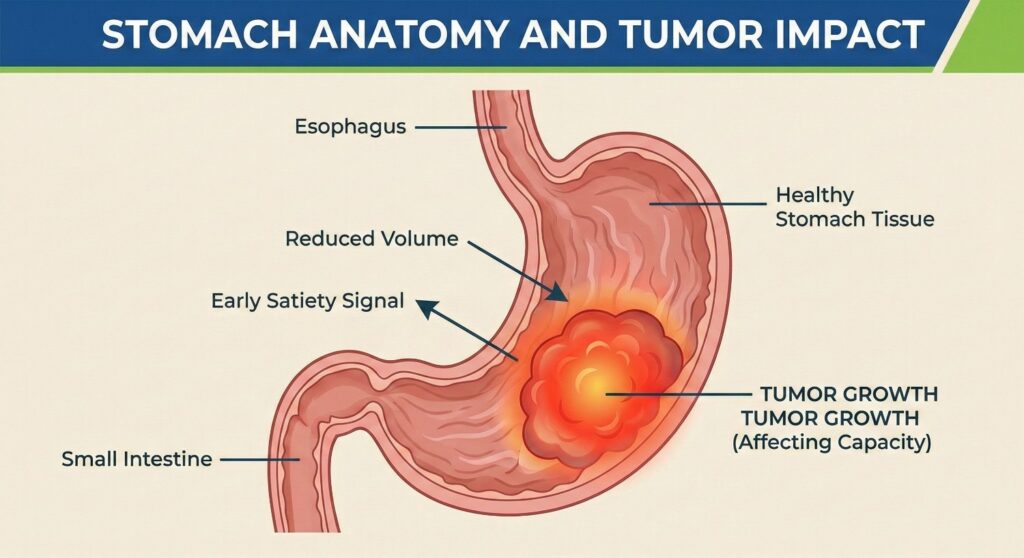
Known medically as early satiety, this sign is characterized by a feeling of extreme fullness after eating very little. You might order a standard portion size that you usually finish easily, only to feel stuffed and uncomfortable after eating just a quarter of it.
This sensation occurs because a tumor may be growing inside the stomach, physically reducing its capacity or making the stomach wall less flexible and unable to stretch. This “blockage” effect sends premature signals to the brain that the stomach is full. If you consistently find yourself unable to finish small meals, it is a specific warning sign that the stomach’s function is being compromised.
4. Lasting Abdominal Pain or Discomfort
Pain associated with stomach cancer is often described as vague discomfort rather than sharp, acute pain. It typically manifests in the upper abdomen, just above the navel. Patients often report a dull ache or a gnawing sensation that does not go away.
Unlike a standard stomach ache that passes after a bowel movement or a few hours, this discomfort is persistent. It is caused by the tumor irritating the stomach lining or pressing against surrounding tissues. While mild abdominal pain is common, any pain that persists for several weeks without a clear cause is a potential indicator of a deeper issue.
5. Persistent Nausea and Vomiting
Occasional nausea is a part of life, but persistent nausea that occurs without a clear reason—like the flu or food poisoning—is concerning. This sign may escalate to vomiting, which is the body’s way of trying to clear an obstruction.
In advanced cases, the vomit may contain blood. Fresh blood will appear bright red, while older blood that has been in the stomach for a while may look like dark coffee grounds. This is a critical emergency signal indicating bleeding within the digestive tract. Any instance of vomiting blood requires immediate medical attention.
Stomach Cancer Causes and Risk Factors
While identifying symptoms is key, understanding stomach cancer causes and risk factors can help you assess your personal risk. The disease is rarely caused by one single factor but rather a combination of genetics and lifestyle.
- H. pylori Infection: Long-term infection with this bacteria is a major cause.
- Diet: A diet high in salty, smoked, or pickled foods correlates with higher risk.
- Tobacco Use: Smoking doubles the risk of stomach cancer, particularly in the upper part of the stomach.
- Age and Gender: It is more common in men and people over the age of 55.
Frequently Asked Questions
Can stress cause these symptoms? Yes, stress and anxiety are powerful triggers for digestive issues like nausea, indigestion, and stomach pain. However, stress typically does not cause objective physical signs like unexplained weight loss or blood in the stool. If your symptoms are persistent and physical changes occur, do not assume it is just stress.
What are the main risk factors for stomach cancer? The primary risk factors include chronic infection with Helicobacter pylori (H. pylori), smoking, being older than 55, and consuming a diet high in processed, salted, or smoked foods. A family history of the disease also increases risk.
How is stomach cancer diagnosed? The gold standard for diagnosis is an upper endoscopy. During this procedure, a doctor inserts a thin, flexible tube with a camera down the throat to visually inspect the stomach lining. If abnormal tissue is found, a biopsy (small tissue sample) is taken to test for cancer cells.
Conclusion
Recognizing the 5 possible signs associated with stomach cancer—from persistent heartburn and early fullness to unexplained weight loss—empowers you to take action. While these symptoms often point to less severe conditions, their persistence is what matters. If you experience any of these warning signals for more than two weeks, schedule a visit with your doctor. Early detection turns a vague suspicion into a manageable diagnosis, offering the best chance for effective treatment and peace of mind.