

Container Garages: Understanding the Complexity Behind the Simplicity
A container garage can look like the easiest “modern garage” upgrade—but real container garage cost, container garage zoning rules, and container garage building permits often decide whether it’s fast and affordable or frustrating and expensive. Here’s what to check before you build.
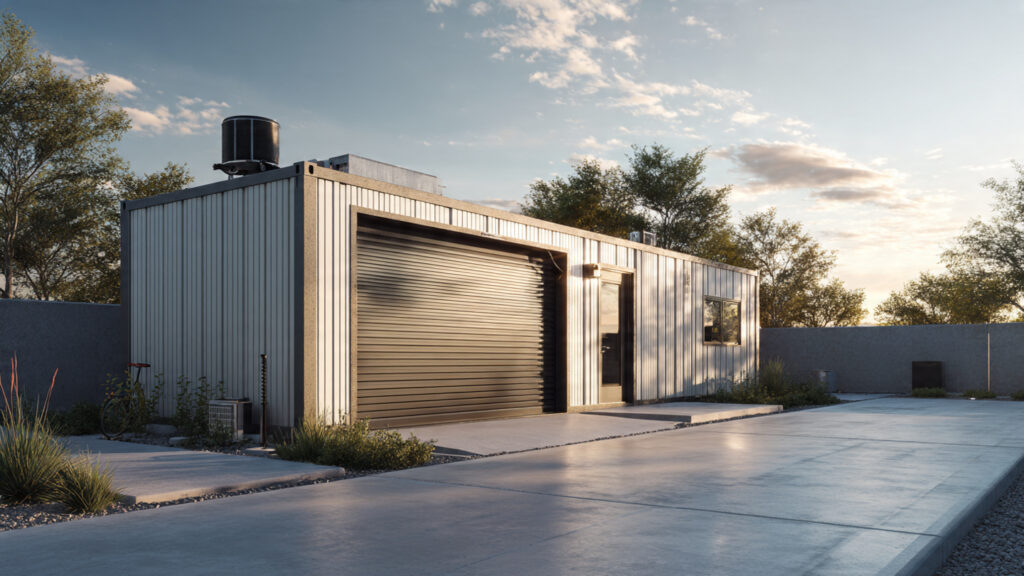
1) The real “first step”: zoning, codes, and permits (where most projects stall)
Most homeowners assume buying a container is the hard part. In reality, local rules usually determine whether you can place a shipping container garage at all—and what it must look like once it’s on your property.
- Zoning approval comes first: Ask if a detached garage made from a shipping container is allowed in your residential zone and whether it’s classified differently than a standard garage.
- Setbacks can shrink your plans: Many lots can’t fit a full-length container once required distances from property lines, streets, and the main home are applied.
- Size/height limits matter: A “two-car” plan can exceed max allowable square footage for detached structures in some areas.
- HOA and aesthetics: Some neighborhoods require exterior finishes, siding, or paint—so the “simple steel box” may need a full facade to comply.
- Permits and plans: Many jurisdictions treat container garages as permanent buildings, meaning building permits and code compliance are expected, not optional.
2) Why the structure isn’t “plug-and-play”: engineering, door cuts, and safety requirements
Shipping containers are designed for cargo loads, not as garages—so converting them into safe, code-compliant spaces usually requires professional-level modifications.
- Garage door openings weaken the shell: Cutting a wide opening for standard garage doors can compromise structural integrity. A reinforced steel frame is often needed to keep the roofline and sidewalls stable.
- A second “people door” is commonly required: In many builds, you’ll need a standard pedestrian door in addition to the main garage door for safe entry/exit.
- Stamped drawings may be required: If you’re making structural cuts, local departments frequently want engineered plans to confirm the build is safe.
- Used containers aren’t pristine: Dents, dings, and wear can be cosmetic—or can complicate door alignment and sealing, especially if the container wasn’t stored level.
3) Site prep and foundations: the hidden cost behind “set it down and you’re done”
A container can weigh several tons even when empty. Without a proper base, it can settle unevenly, warp, and create chronic problems like jammed doors and poor drainage. Common foundation approaches homeowners consider:
- Concrete slab: Popular for a true garage feel with a durable floor, but adds excavation, forming, pouring, and finishing costs.
- Pier foundation: Footings at corners (and sometimes mid-span) can cost less than a full slab, but you may not get a finished floor.
- Gravel pad: Sometimes workable with stable soil and proper compaction, but may not satisfy every building department for a permanent garage.
Also plan for:
- Grading and drainage: The site usually needs professional leveling so water drains away from both the container and the house.
- Utilities: If you want power, lighting, outlets, or an opener, you may need trenching and electrical work—often requiring permits and licensed installation.
4) “Simple box” problems: flooring chemicals, insulation, ventilation, and condensation
Even with the shell installed, a shipping container garage can be uncomfortable—or damaging to store tools and vehicles—unless you address heat, cold, and moisture.
- Flooring concerns: Many containers have marine-grade plywood that may be chemically treated for pest resistance. Many owners seal it with industrial-grade coatings or replace it entirely.
- Insulation is not optional in most climates: A steel box can overheat in sun and turn frigid in winter. Spray foam is popular because it helps form a vapor barrier; rigid foam boards are another common approach.
- Ventilation prevents rust and mold: Condensation can build up inside sealed steel. Vents, roof ventilation, or an exhaust fan can reduce moisture and help protect stored vehicles, tools, and the container’s interior walls.
Conclusion: Container garages can be durable and visually striking, but the “simple look” often hides real-world complexity—especially around container garage zoning rules, container garage building permits, foundation requirements, and climate control. If you want a build that lasts, start with local compliance checks, budget beyond the container price, and plan modifications (doors, reinforcement, insulation, ventilation) as core requirements—not upgrades.