

Look for These 5 Potentially Valuable Coins in Your Change
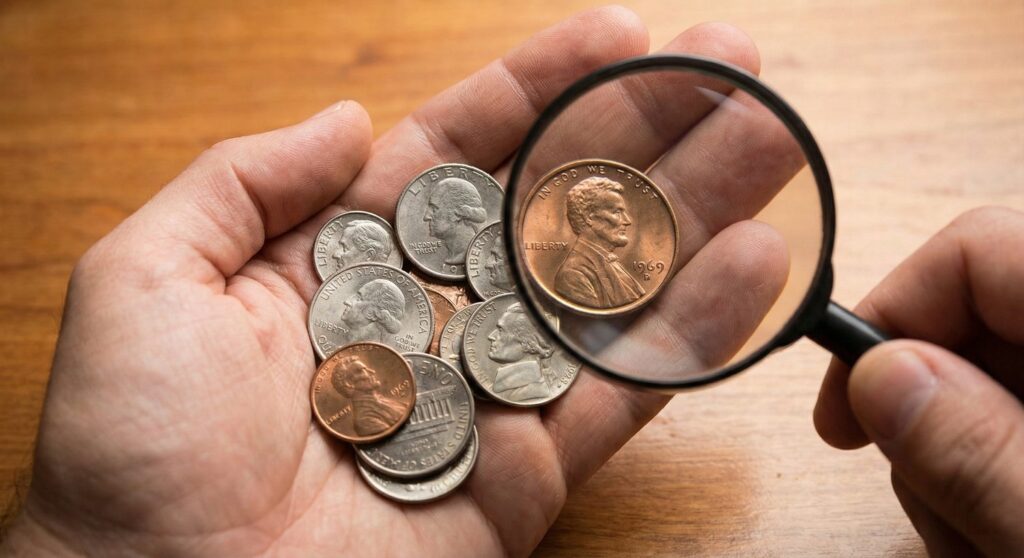
Ever glance at the handful of change you receive from the grocery store and wonder if you are holding a hidden treasure? It might seem unlikely, but if you look for these 5 potentially valuable coins in your change, you could be holding a small fortune. Finding one just requires a sharp eye and knowing exactly what errors or dates to look for. This guide will walk you through five specific coins that are worth money so you can start checking your pockets and coin jars today.
1. The 1944 Steel Lincoln Penny
During World War II, copper was a critical material needed for the war effort, leading the U.S. Mint to make 1943 pennies out of zinc-coated steel. By 1944, production was supposed to return to the standard copper alloy. However, a few leftover steel planchets (the blank metal discs) from 1943 were accidentally fed into the coin presses. The result was the 1944 Steel Lincoln Penny, making it one of the most famous rare valuable coins in American history.
- How to Identify It: The easiest test is with a standard magnet. A normal 1944 copper penny will not stick. If your 1944 penny is magnetic and has a distinct, silvery-grey color, you have found a true rarity.
- What It’s Worth: The penny coin value here depends heavily on the coin’s physical condition. Even in poor, heavily circulated condition, a 1944 Steel Penny can fetch several thousand dollars, with pristine, uncirculated examples selling for well over $100,000 at auction.
2. The 1969-S Doubled Die Obverse Lincoln Penny
Coin collectors love “doubled die” errors. This happens when the hub strikes the coin die twice at slightly different angles, creating a noticeable doubling of the letters and numbers. While many minor doubled die varieties exist, the 1969-S is the most dramatic and valuable of the Lincoln Memorial cent series. When you look for these 5 potentially valuable coins in your change, this one stands out because the doubling is visible to the naked eye.
- How to Identify It: Look for a 1969 penny with an “S” mint mark below the date. Check for strong, shelf-like doubling on the front (obverse) letters, particularly on “IN GOD WE TRUST” and “LIBERTY.” A genuine example will have sharp and distinct doubling, not the blurry, flat “machine doubling” commonly seen.
- What It’s Worth: In average circulated condition, this penny can fetch between $10,000 and $40,000. Uncirculated versions have sold for over $100,000, making it one of the top old coins that are worth money.
3. The 2004-D Wisconsin State Quarter (Extra Leaf Error)
Not all treasures are ancient. The 50 State Quarters program was incredibly popular in the early 2000s, but a fascinating error occurred on some of the quarters minted in Denver for the state of Wisconsin. A flaw in one of the coin dies created what appears to be an extra leaf on the ear of corn on the reverse (back) side. There are two main varieties of this error: the “High Leaf” and “Low Leaf.”
- How to Identify It: Flip over a 2004 Wisconsin quarter with a “D” mint mark. Look at the ear of corn on the left side of the cheese wheel. On the error coin, you will see an additional leaf either pointing straight up or bowing down, almost touching the cheese wheel.
- What It’s Worth: Depending on the condition, an Extra Leaf Wisconsin Quarter can be worth between $50 and $150. It’s a highly accessible find that proves you should always look for these 5 potentially valuable coins in your change.
4. The 1982 “No P” Roosevelt Dime
In 1980, the Philadelphia Mint began adding a “P” mint mark to all the coins it produced, except for the penny. In 1982, a mistake at the mint resulted in at least one die being used to strike dimes entirely missing this “P” mint mark. Because it was the first year this mark was supposed to appear on dimes, its absence makes the coin highly collectible. These coins were originally released primarily around Sandusky, Ohio, making them a fun regional treasure hunt.
- How to Identify It: Look at a 1982 dime. Just above the date on the front of the coin, there should be a small letter. If there is no letter at all (not a “D” or an “S”), you may have found the valuable “No P” error.
- What It’s Worth: In average circulated condition, these dimes are generally valued around $50 to $100. Crisp, uncirculated examples can be worth several hundred dollars to the right buyer.
5. The 1937-D “3-Legged” Buffalo Nickel
While they are not common in everyday circulation anymore, Buffalo Nickels can still be found in old coin jars, piggy banks, or inherited collections. One of the most famous errors in all of U.S. coinage is the 1937-D “3-Legged” Buffalo Nickel. This error occurred when a mint employee over-polished a coin die to remove a clash mark, accidentally erasing the buffalo’s entire front right leg in the process.
- How to Identify It: You need a 1937 nickel with a “D” mint mark on the back, beneath the words “FIVE CENTS.” Examine the buffalo closely; the error version is clearly missing its front right leg, leaving smooth ground beneath its belly.
- What It’s Worth: Even in heavily worn condition, a genuine 3-Legged Buffalo Nickel is worth $400 to $600. In better condition, the value quickly climbs into the thousands.
Frequently Asked Questions
What should I do if I think I found a valuable coin? First, never clean it. Cleaning a coin, even with a soft cloth or mild soap, leaves microscopic scratches that drastically reduce its value to a collector. Place the coin in a soft plastic flip or protective case to prevent further damage. Then, search online for “coin collectors near me” to find a reputable local dealer who can give you a professional, hands-on appraisal.
What makes a coin valuable? A coin’s value is determined by three main factors: rarity, condition (or grade), and demand. Rarity refers to how few of the coins were minted or have survived over the years. Condition measures the amount of wear and tear. Demand reflects how many collectors actively want to own that specific piece. Error coins are inherently valuable because they are rare by nature.
Where is the mint mark on a coin? The location of the mint mark varies by the type of coin and the year it was produced.
- Lincoln Cents: Located below the date on the obverse (front).
- Jefferson Nickels: To the right of Monticello on the reverse (pre-1968) or below the date on the obverse (2005-present).
- Roosevelt Dimes: Just above the date on the obverse (1968-present).
- Washington Quarters: To the right of Washington’s ponytail on the obverse (older designs) or below “IN GOD WE TRUST” (State Quarters).
Conclusion
Your pocket change is more than just a way to pay for a coffee; it is a potential lottery ticket. When you actively look for these 5 potentially valuable coins in your change, you turn a mundane daily task into a thrilling treasure hunt. From the highly magnetic 1944 steel penny to the curious 3-legged buffalo nickel, everyday currency can hold extraordinary value. Keep your eyes peeled, protect your finds, and consult a professional if you spot something special in your wallet today.