
Police-Endorsed Tips: 3 Steps for Securing Your Home Each Night
Feeling safe in your own house shouldn’t be a guessing game. To help you protect your family and your property, law enforcement professionals consistently recommend following Police-Endorsed Tips: 3 Steps for Securing Your Home Each Night. By taking a proactive approach to your property—from enhancing your Front Door Security to mastering your nightly habits—you can drastically reduce the risk of a break-in. Let’s dive into the three exact steps you can take today to confidently lock down your house after sunset.
Step 1: Master Your Lighting and Landscaping
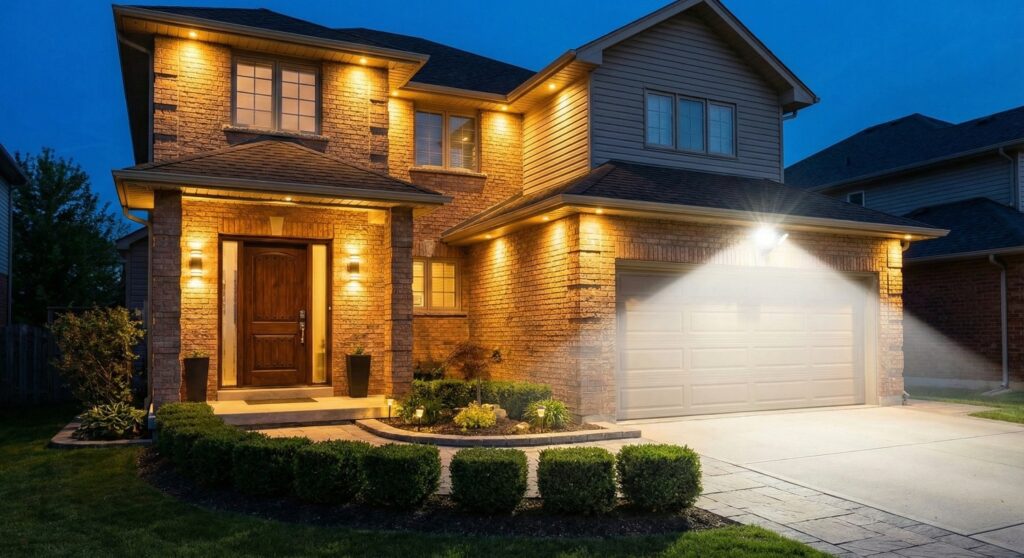
From a police officer’s perspective, the simplest deterrent is often the most effective. Criminals thrive in darkness because it provides cover and anonymity. The first of the 3 steps for securing your home each night involves strategically using light and maintaining your yard to eliminate this advantage.
Create an Illuminated Barrier The goal is to eliminate dark spots around your home’s perimeter, especially near potential entry points.
- Motion-Activated Floodlights: Install smart floodlights above your garage and back patio. Brands like Ring and Eufy offer reliable options typically ranging from $150 to $250 that instantly flood the area with light and record video when motion is detected.
- Porch and Entryway Lights: Use dusk-to-dawn LED sensor bulbs (usually $10 to $20 per pack) that automatically turn on at night. This provides constant illumination without driving up your energy bill.
- Landscape Lighting: Install low-voltage pathway lights along walkways to remove dark shadows and potential hiding spots along the approach to your home.
Eliminate Hiding Spots Your landscaping can either help or hinder your security efforts. Overgrown bushes close to your house provide perfect cover for someone trying to pry open a window undetected.
- The 3-Foot, 6-Foot Rule: Police strictly advise trimming all ground shrubs so they are no taller than three feet. Similarly, trim the lower branches of mature trees up to a height of six feet to ensure a clear line of sight from the street.
- Maintain Your Yard: A freshly cut lawn and weeded garden signal that the property is actively monitored, providing a psychological cue that makes burglars move on to an easier target.
Step 2: Fortify Your Doors and Windows
While lighting is an excellent visual deterrent, a determined intruder will eventually test your home’s physical barriers. The second of our 3 steps for securing your home each night requires reinforcing these vulnerable entry points.
Upgrade Your Door Security Your main entry doors are your primary line of defense. Standard builder-grade locks and hollow doors simply are not enough to stop forced entry.
- Install a Quality Deadbolt: Ensure your Home Security Doors are equipped with an ANSI Grade 1 single-cylinder deadbolt (costing roughly $35 to $50). The bolt must have a one-inch “throw” to fully anchor into the frame.
- Reinforce the Strike Plate: Replace the standard half-inch screws in your door’s metal strike plate with 3-inch steel screws. This drives the hardware deep into the wall stud, making your Security Front Doors for Home highly resistant to being kicked in.
- Invest in Solid Materials: If you have hollow doors, upgrade to High Security Front Doors made of solid wood, fiberglass, or steel, which typically range from $500 to $1,500 but offer unparalleled impact resistance.
- Secure Sliding Glass Doors: Place a heavy wooden dowel or a specialized adjustable steel security bar (around $20) in the bottom interior track to physically prevent the door from sliding open.
Don’t Forget Your Windows Ground-floor windows are notoriously vulnerable. Upgrading your Glass Window Security ensures that intruders cannot easily bypass your heavy doors.
- Use Secondary Locks: Install aftermarket window track locks or pin locks (averaging $10 to $15 per pack) to prevent the window sash from opening more than a few inches.
- Apply Security Film: Adhere a clear, shatter-resistant security film (like 3M Safety Film, typically $30 per roll) to the inside of your glass panes. This holds shattered glass tightly together, delaying entry and creating a massive noise deterrent if struck.
Step 3: Establish a “9 PM Routine”
The final stage of the 3 steps for securing your home each night relies entirely on your personal habits. Technology and strong locks only work if you actively use them. The “9 PM Routine” is a simple, police-endorsed behavioral checklist you must run through every evening.
The Nightly Security Checklist Set a recurring daily alarm on your smartphone for 9:00 PM to remind you to complete these specific tasks:
Check All Doors and Windows: Physically turn the deadbolts on your exterior doors and press down on ground-floor window latches to confirm they are locked.
Close the Garage Door: Verify the large overhead bay is shut, and immediately lock the interior pedestrian door that connects the garage to your living room.
Turn On Exterior Lights: Ensure your porch lights and backyard floodlights are powered on or set to their automated motion-sensing modes.
Remove Valuables from Your Car: Bring laptops, purses, and spare keys inside, and click your key fob to guarantee your vehicle doors are locked.
Close Blinds and Curtains: Draw your heavy window treatments to stop criminals from “window shopping” for high-value items like flat-screen TVs or gaming consoles.
Frequently Asked Questions
Is a home security system worth the investment? Yes, a visible home security system is a highly effective deterrent. DIY systems like SimpliSafe require an upfront hardware cost of $200 to $400, while professionally monitored systems from companies like ADT average $40 to $60 per month. Even installing a $100 smart doorbell camera significantly reduces your risk of a break-in.
What should I do if I hear a strange noise at night? Your safety is the absolute top priority. Do not go outside to investigate the noise. If you believe someone is attempting to breach your home, immediately move your family to a safe room, lock the solid door, and dial 911. Always trust your instincts and let the police handle potential external threats.
Does leaving a TV or radio on help? Yes, it creates the illusion of occupancy. Sound and flickering light suggest that people are awake, which deters intruders looking for a quiet, empty target. Use smart plugs (available for $10 to $15 each) to schedule a living room lamp or a radio to turn on automatically between 8:00 PM and midnight.
Conclusion
Implementing these Police-Endorsed Tips: 3 Steps for Securing Your Home Each Night transforms your property from an easy target into a fortified fortress. By illuminating your yard, upgrading to strong security doors and window films, and committing to a rigid 9 PM lockdown routine, you take total control of your family’s safety. Start tonight by checking your locks, trimming back your shrubs, and setting your daily security alarm.